
Low Frequency (50/60Hz) Single Phase to DC Welding Transformer
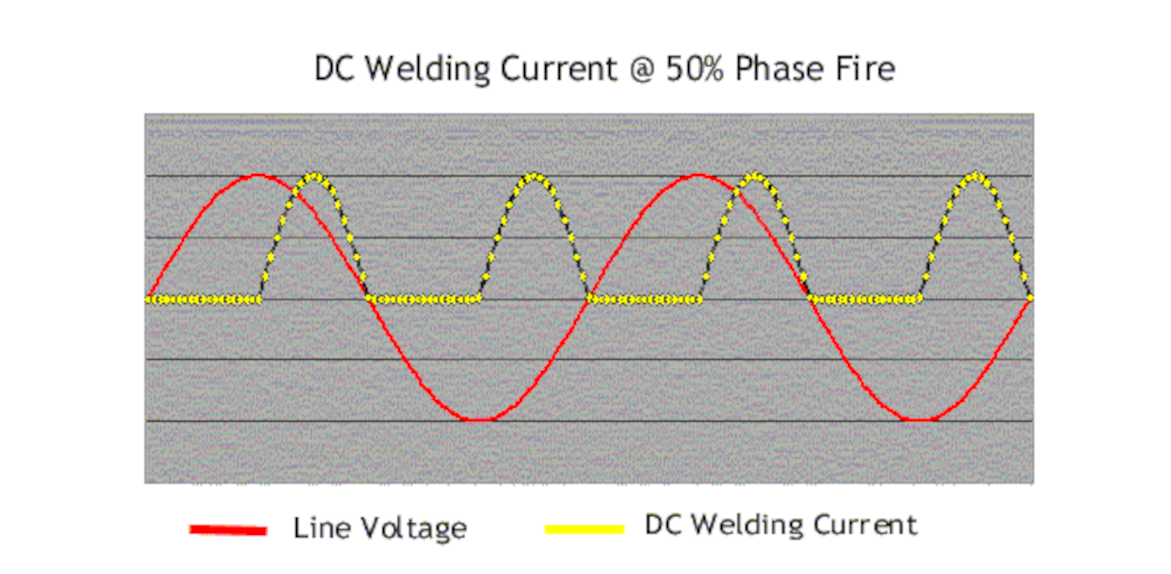
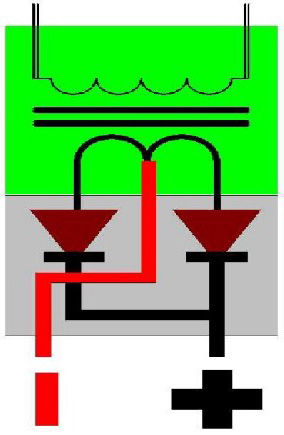
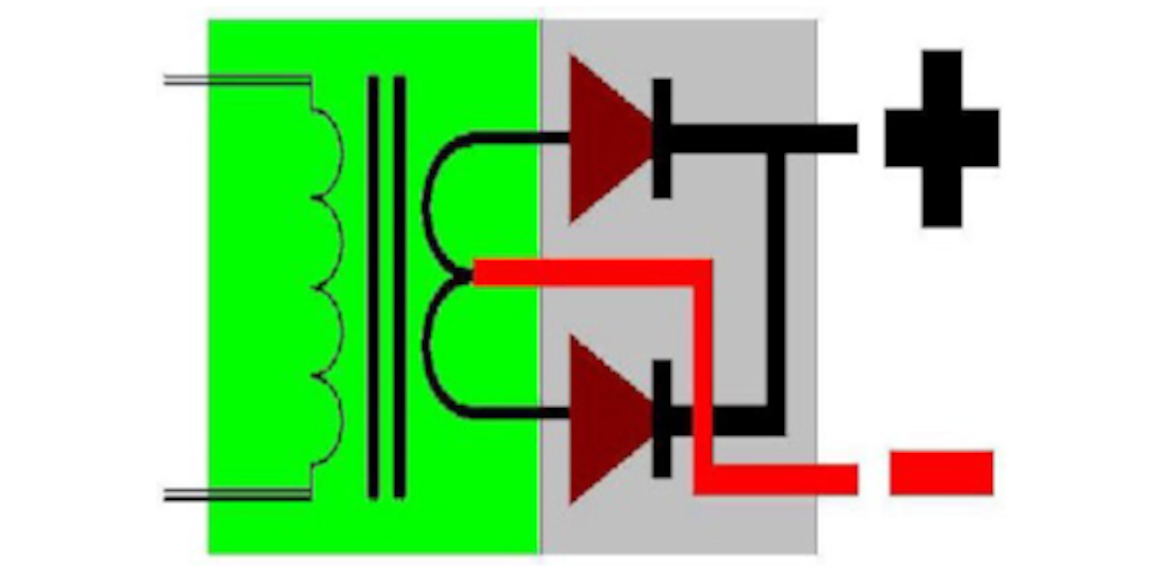
The power to the transformer is controlled by inverse parallel SCRs in the welding control. The secondary voltage varies from 3 volts upwards to 30 volts depending on the turns ratio between the primary and secondary windings. There are diode packs hooked up on the secondary of the transformer. The transformer above represents a center tapped fullwave bridge. Since current on the secondary does not alternate between positive and negative impulses, the inductive impedance becomes negligible. In determining the size of transformer necessary for a specific welding task, one first determines the required current output for the weld, then determines the voltage required to push the current through the resistance of the tools and the workpieces. Only tool and workpieces resistance must be accounted for determining the required voltage since the inductive impedance is only sustained during the first cycle or so.